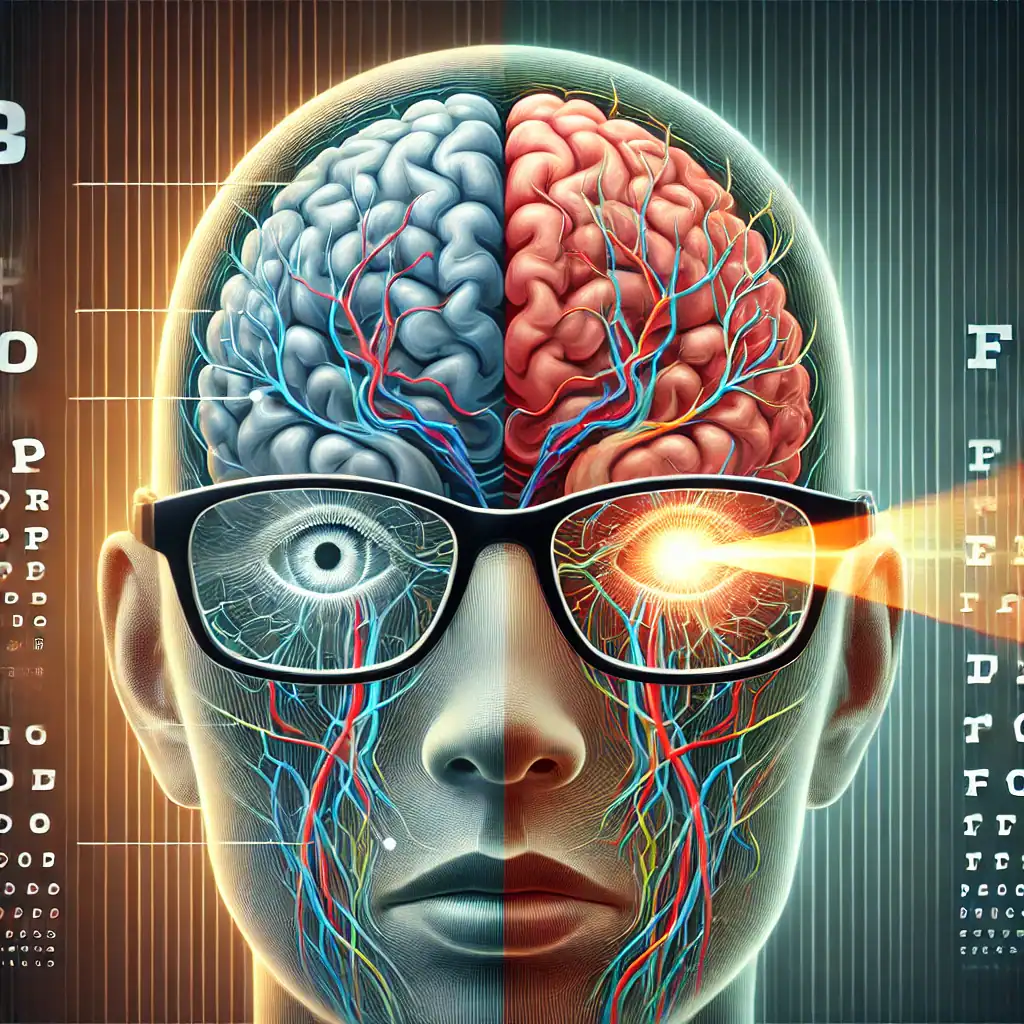
What is Neuro-Optometry?
Neuro-Optometry is a sub-specialty of optometry involving assessing and treating patients with brain injuries from a variety of causes: The neuro-optometric assessment from our Behavioural Optometrist, Sarah Lang, involves the…
Written by

Emman Cabezas
Share this

The Importance of Regular Routine Eye Examinations
You might ask – why should I get my eyes tested when my vision is fine and I’ve had my cataracts done? A recent case illustrates why it is important….

Feeling dizzy, unsteady, or like the room is spinning?
If all of this sounds familiar to you, there is a chance it could be your eyes! Your vision plays a huge role in your balance. In fact, your sense of stability…
Neuro-Optometry is a sub-specialty of optometry involving assessing and treating patients with brain injuries from a variety of causes:
- traumatic e.g. concussion or more severe traumatic injury,
- acquired e.g. stroke, brain tumour
- neurological disease e.g. Parkinsons, MS
The neuro-optometric assessment from our Behavioural Optometrist, Sarah Lang, involves the normal parts of a traditional eye examination like eye health checks, measurement of visual acuity on the letter chart, checking peripheral vision and glasses prescription. However, it is more comprehensive and takes a detailed history of any brain injuries and the subsequent difficulties, looks at eye movements, the co-ordination of the two eyes together (binocular vision) and the focussing of the eyes as these are commonly affected in a brain injury. It may also involve an investigation into balance, which involves three sensory systems – vestibular, proprioception and vision.
Common symptoms from a brain injury or neurological disease:
- Blurred vision – especially for close work
- Double vision
- Difficulty moving the eyes fully in all directions
- Light sensitivity or photophobia
- Visual Motion Sensitivity – difficulty with movement in your peripheral vision e.g. when walking down a supermarket aisle
- Dizziness or nausea – especially with head movement
- Dry eye
- Difficulty processing visual information – especially simultaneously with other information
Treatment may include:
- Glasses – which may incorporate prism or a custom coloured filter
- Vision therapy – a programme of activities to work on areas of weakness or to integrate other sensory systems with vision e.g. vestibular (balance) or improve brain processing of visual information to make it more automatic
- Further testing or referral
- Treatment for dry eye
- Explanation of the problem and how to compensate for any deficits
Chat to us today to find out more.