Understanding Hyperopia
Hyperopia occurs when the eyes need to work harder to focus, particularly at near distances. Some people may experience blurred vision, eyestrain, or headaches. In some cases, it can also affect distance vision.
What is Hyperopia?
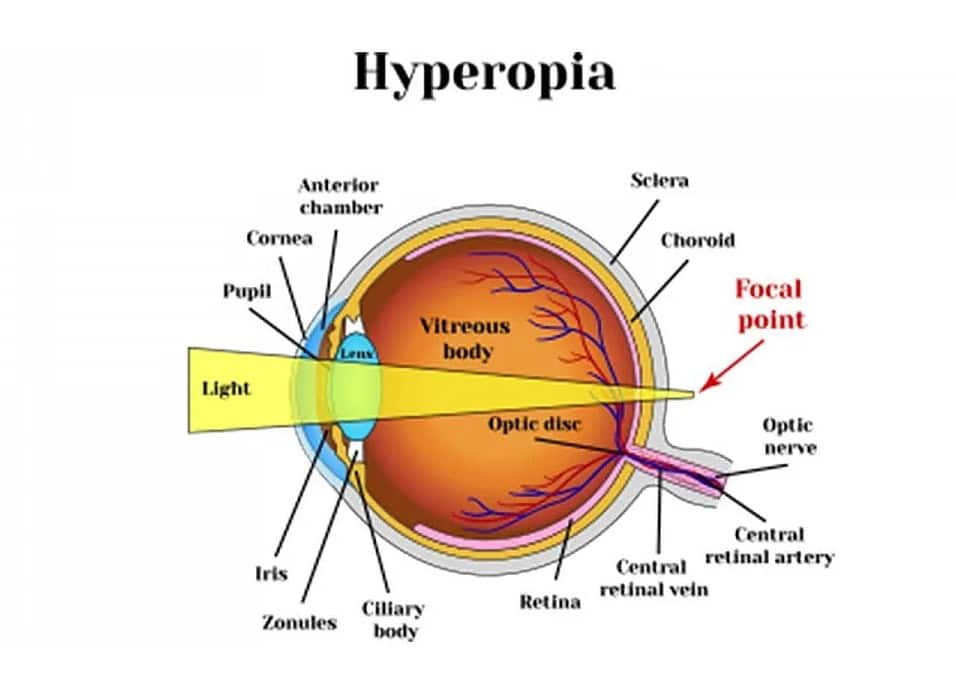
Hyperopia, or long-sightedness, is when distant objects are often clearer than things up close. It usually occurs when the eyeball is slightly shorter than normal or the cornea is not curved enough, causing light to focus behind the retina instead of directly on it.
Identifying the Common Signs of Hyperopia
People with hyperopia may notice:
- Blurred vision for close tasks, especially reading or screen use
- Eyestrain and tired eyes, particularly later in the day
- Headaches or reduced concentration with near work
- In children, they can be uninterested in reading

Causes and how it changes over time
Hyperopia is often inherited and is a very common vision condition in children and adults. Many children are a little long-sighted when they are young, and this may improve as their eyes grow.
Treatment and How We Can Help
Eyes with hyperopia are capable of clear, comfortable vision with the right optical correction. Your optometrist can discuss the best option for you to help you read clearer and more comfortably.